

Table of Contents
Greenville SC has a competitive pest control market, with many long-established companies benefiting from brand familiarity and years of local presence. However, longevity alone does not guarantee visibility in today’s search environment. Homeowners increasingly rely on Google Maps, local search results, and mobile searches to find pest control services when issues arise.
This creates an opportunity for newer and growing pest control companies. With the right local SEO strategy, it is possible to compete effectively by focusing on relevance, proximity, and search intent rather than brand age alone.
This guide explains how pest control companies in Greenville SC can use local SEO to improve visibility, attract high-intent searches, and turn website traffic into booked inspections and service calls.
Why Local SEO Matters for Pest Control Companies
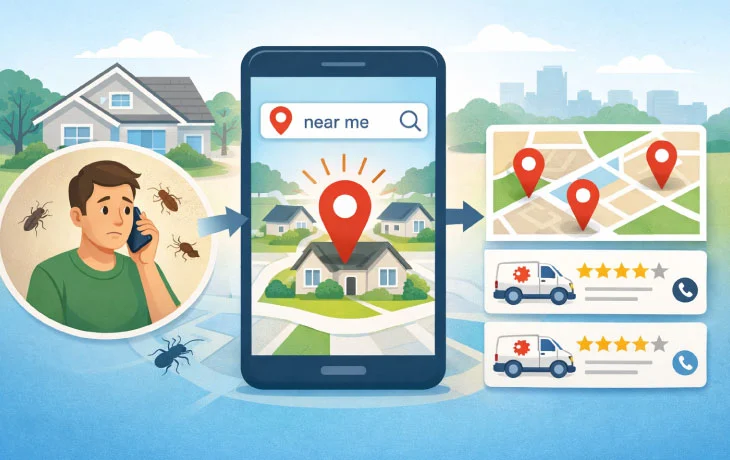
Pest control searches are highly local and often urgent. Homeowners are typically looking for help within their immediate area and expect fast, trustworthy options. As a result, search engines prioritize businesses that demonstrate strong local relevance.
Local SEO helps pest control companies appear in:
- Google Maps and local pack results
- Location-based searches such as “pest control near me”
- Service-specific searches tied to neighborhoods and cities
A well-executed local SEO strategy ensures your business appears when potential customers are actively searching for pest control solutions in Greenville.
Google Business Profile: Your Most Important Marketing Asset
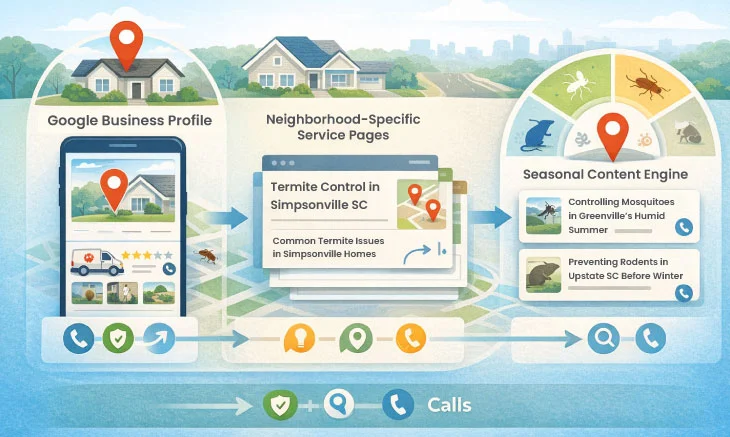
Your Google Business Profile is one of the most important assets for local SEO. It often serves as the first impression homeowners have of your business, and for many searches, it appears before your website does.
Key Optimization Areas
Accurate Business Name, Address, and Phone Number
Ensure this information matches exactly across your website, citations, and directories. Inconsistencies confuse search engines and weaken local rankings. If your business is listed as “ABC Pest Control” on Google but “ABC Pest Control, Inc.” on your website, search engines may treat these as different businesses.
Proper Primary and Secondary Service Categories
Select “Pest Control Service” as your primary category. Add secondary categories like “Wildlife Control Service” or “Termite Control Service” only if you actively provide those services. Choosing irrelevant categories to capture more searches will hurt your visibility for the services you actually offer.
Detailed Service Descriptions That Reflect What You Actually Offer
Instead of generic descriptions, be specific: “We provide same-day mosquito treatment for residential properties in Greenville, including barrier spraying and larvae control for long-lasting relief.” This clarity helps both search engines and homeowners understand your services and builds confidence before they even call.
Regular Updates Using Posts and Photos
Share seasonal pest alerts, before-and-after treatment photos, and service reminders. A photo of a recent termite inspection in a Greenville neighborhood performs better than stock imagery. Posts about current pest activity (“Seeing more ants this week? Here’s why”) keep your profile active and relevant.
Consistent Responses to Reviews and Customer Questions
Address concerns about treatment safety, pet-friendly options, and service guarantees directly in your responses. This builds trust and provides content that addresses common objections. When you respond professionally to a negative review, prospective customers see how you handle problems, which often matters more than the complaint itself.
Maintaining a complete and active profile helps improve visibility in map results and reinforces trust with potential customers.
Building Neighborhood-Specific Service Pages
One of the most effective ways to compete locally is by creating service pages tailored to specific areas within Greenville. These pages signal to search engines that your business serves multiple neighborhoods and understands local conditions.
How to Structure Local Service Pages
Focus on One Service and One Location Per Page
Create separate pages like “Termite Control in Simpsonville SC” and “Mosquito Treatment in Five Forks,” rather than combining multiple services or locations on a single page. This allows each page to rank for highly specific searches that homeowners actually use.
Reference Local Neighborhoods, Landmarks, or Service Areas Naturally
Example: “Our termite inspections cover homes throughout the Paris Mountain area, including properties near Furman University and Lake Conestee Nature Park.” This demonstrates local knowledge and helps your pages appear for neighborhood-specific searches.
Clearly Explain the Pest Issues Commonly Addressed in the Region
In Greenville’s humid climate, address moisture-related pest problems like subterranean termites, carpenter ants, and cockroaches that thrive in the area’s conditions. Explain why these pests are common in Greenville specifically, not just general pest information that could apply anywhere.
Include Localized Headings and Internal Links
Use headings like “Common Termite Problems in Simpsonville Homes” and link to related service pages and seasonal blog content. This creates a network of relevant content that strengthens your overall site authority.
Example Page Structure
Title: Termite Control Services in Simpsonville SC
Heading 1: Why Simpsonville Homes Need Termite Protection
Heading 2: Our Termite Inspection Process for Simpsonville Properties
Heading 3: Treatment Options for Termite Infestations
Heading 4: Schedule Your Simpsonville Termite Inspection
This approach helps your website appear for more targeted searches while improving overall site relevance. A homeowner searching “termite inspection Simpsonville” finds exactly what they’re looking for, which increases the likelihood they’ll call.
Using Seasonal Content to Capture Demand
Pest control demand often changes throughout the year. Different pests become active during different seasons, and homeowners search accordingly. Your website content should reflect these patterns.
Seasonal Content That Drives Calls
Spring Content
- “When to Schedule Your Annual Termite Inspection in Greenville”
- “How to Identify Carpenter Bee Damage in Spring”
- “Why Are Fire Ants So Active Right Now?”
Summer Content
- “Controlling Mosquito Populations During Greenville’s Humid Months”
- “Keeping Wasps Away From Your Outdoor Living Spaces”
- “Are Fleas Worse This Summer? What Greenville Homeowners Should Know”
Fall Content
- “Preventing Rodent Entry Before Winter in Upstate SC”
- “Why You’re Seeing More Spiders Indoors This Season”
- “Preparing Your Home for Overwintering Pests”
Winter Content
- “Are Termites Active in Winter? What Greenville Homeowners Need to Know”
- “Dealing with Indoor Ant Problems During Cold Weather”
- “When to Worry About Cockroaches in Your Greenville Home”
Publishing Educational Content Tied to Seasonal Concerns
Write blog posts that answer specific questions homeowners are searching for during peak pest seasons. These posts should provide genuine value, not just sales pitches. A homeowner researching “are fire ants active in Greenville during winter” wants an answer first, and a service provider second.
Supporting Service Pages with Timely Blog Content
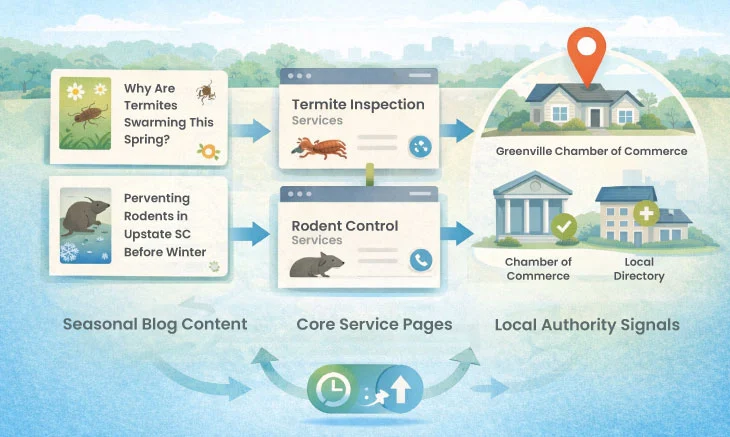
Link seasonal blog posts to relevant service pages. A post about spring termite swarms should link to your termite inspection service page. This creates a natural path from educational content to service offerings.
Seasonal SEO content reinforces topical authority and keeps your website relevant year-round without relying on constant promotions.
Authority Building Through Local Signals
Search engines evaluate trust and credibility using a variety of local signals. Building authority does not require aggressive tactics, but it does require consistency.
Effective Local Authority-Building Strategies
Earning Mentions from Local Organizations and Directories
Get listed in the Greenville Chamber of Commerce directory, local home service directories, and neighborhood association resources. These citations reinforce your local presence and provide additional pathways for customers to find you.
Maintaining Consistent Business Information Across Platforms
Your business name, address, and phone number (NAP) should be identical on your website, Google Business Profile, Yelp, Facebook, Angi, and all other platforms. Even small variations like “Street” vs. “St.” or including “LLC” on some listings but not others can create confusion for search engines.
Implementing Local Business Schema Markup
Add structured data to your website that tells search engines your service areas, hours, contact information, and services offered. This technical element strengthens local search visibility by making it easier for search engines to understand your business information. While this requires some technical knowledge, it’s worth implementing.
Publishing Helpful, Service-Focused Content on Your Website
Create resources that address real concerns: treatment safety for pets, preparation steps before service, what to expect during inspections, and how to identify common Greenville pests. This content builds trust with potential customers and demonstrates expertise to search engines.
Building Internal Links Between Related Service and Location Pages
Connect your mosquito treatment page to your seasonal mosquito blog posts and to neighborhood-specific mosquito service pages. This helps search engines understand the relationships between different parts of your website and distributes authority across your pages.
These signals collectively strengthen your local presence and support higher visibility over time.
Conversion Framework: Turning Local Traffic Into Booked Inspections
Local SEO is only effective when website visitors are guided toward a clear next step. For pest control companies, the goal is to reduce friction and make it easy for homeowners to request service.
Clear Service Messaging
Each page should clearly explain what problems are being solved, the types of pests addressed, and the areas served. Avoid industry jargon that confuses homeowners. Instead of “integrated pest management solutions,” say “we eliminate termites, ants, and roaches using safe, effective treatments.”
Homeowners don’t care about your process until they understand you can solve their problem. Lead with the outcome, then explain your approach.
Strong Trust Signals
Display your South Carolina pest control license number prominently. Highlight certifications, service guarantees, and pet-safe treatment options. Address common objections directly: “All treatments are EPA-approved and safe for families with children and pets.”
Many homeowners hesitate to call pest control companies because they’re worried about chemical exposure or uncertain about what service will cost. Addressing these concerns upfront reduces the mental barrier to calling.
Focused Calls to Action
Use simple, consistent calls to action throughout your site:
- “Schedule Your Free Inspection”
- “Request Same-Day Service”
- “Get Your Quote in 60 Seconds”
Avoid vague CTAs like “Learn More” or “Contact Us.” Be specific about what happens next. If you offer free inspections, say so clearly. If you provide same-day service, make that prominent.
Mobile-Friendly Experience

Many pest control searches happen on mobile devices during or immediately after discovering a pest problem. A homeowner who finds a wasp nest on their deck isn’t going to wait until they’re back at their computer to search for help.
Your pages should load in under three seconds. Use large, tappable phone buttons and short contact forms optimized for mobile keyboards. Test your website on a phone yourself. If it’s frustrating for you to use, it’s frustrating for potential customers.
Simple Contact Paths
Reduce form fields to essentials: name, phone number, service needed, and zip code. Every additional field decreases conversion rates. Asking for a detailed description of the problem might seem helpful, but it creates friction. You can get those details on the phone call.
For urgent issues, offer click-to-call buttons prominently rather than forcing form submissions. A homeowner dealing with a rodent in their kitchen wants to talk to someone immediately, not fill out a form and wait for a callback.
Handling After-Hours Inquiries
Set expectations clearly. If you don’t offer 24/7 emergency service, state your response time: “Submit your request now and we’ll contact you first thing tomorrow morning.” This manages expectations while still capturing the lead.
Many pest control companies lose leads by not being clear about response times. A homeowner who submits a form at 9 PM and doesn’t hear back until noon the next day may have already called a competitor who set proper expectations.
When these elements are in place, increased visibility translates more reliably into real inquiries.
Addressing Pest Control-Specific Challenges
Certain concerns are unique to the pest control industry and should be addressed proactively on your website and in your marketing.
Treatment Safety Concerns
Many homeowners worry about pesticide exposure, especially those with young children or pets. Create FAQ content addressing treatment safety, drying times, and pet re-entry guidelines. This builds trust and reduces objections during service calls.
Example FAQ topics:
- “How long do pets need to stay away after treatment?”
- “Are your treatments safe for children?”
- “What should I do to prepare my home before service?”
- “How long until I can walk barefoot on treated floors?”
Addressing these questions upfront demonstrates transparency and professionalism.
Review Management for Sensitive Issues
Negative reviews about treatment effectiveness or pest recurrence need careful responses. Address the specific concern, explain your service guarantee, and offer to resolve the issue offline. This shows prospective customers how you handle problems.
A professional response to a negative review often does more to build trust than five-star reviews alone. Potential customers understand that problems happen. What they want to know is whether you stand behind your work.
Emergency vs. Scheduled Service Positioning
Clearly distinguish between same-day emergency services (wasp nests, rodent sightings) and scheduled preventative treatments (quarterly pest control, annual termite inspections). This helps homeowners choose the right service level and reduces confusion.
Your pricing, messaging, and calls to action should reflect these different service types. Emergency service pages should emphasize speed and availability. Preventative service pages should emphasize long-term value and peace of mind.
Service Area Boundaries
Be explicit about where you operate. If you serve Greenville but not Spartanburg, state this clearly to avoid wasted inquiries and frustrated customers. Create a service area page that lists the specific neighborhoods, cities, and zip codes you cover.
Being clear about service areas also helps with local SEO. Search engines are more likely to show your business for searches in areas you explicitly claim to serve.
Competing on Relevance, Not Longevity
Established companies often rely on name recognition, but search engines prioritize relevance, proximity, and usefulness. By aligning your website, content, and Google Business Profile with how homeowners actually search, you can compete effectively regardless of how long your business has been operating.
Local SEO rewards businesses that clearly communicate:
- Who they serve
- What services they provide
- Where they operate
- How customers can take the next step
A newer pest control company with a well-optimized website, clear service messaging, and strong local signals can outrank a competitor that’s been in business for 30 years but has a neglected online presence.
Final Thoughts
Local SEO for pest control companies in Greenville SC is not about outspending or outlasting competitors. It is about building a stronger local presence through clarity, relevance, and consistency.
By optimizing your Google Business Profile, creating neighborhood-focused service pages, publishing seasonal content, strengthening technical local signals, and improving conversion pathways, your business can attract more qualified local traffic and turn that visibility into booked inspections and long-term customers.
The pest control companies that win in local search are the ones that make it easy for homeowners to find them, understand what they offer, trust their expertise, and take the next step. Those fundamentals matter more than how long you’ve been in business or how big your marketing budget is.