


Table of Contents
When an air conditioner stops cooling during a South Carolina summer, finding an HVAC company can quickly become a priority. When cooler weather approaches, homeowners may begin thinking about heating maintenance, system performance, or equipment replacement.
These situations create different opportunities for heating and cooling contractors.
Some customers need immediate repairs. Others are researching a major equipment purchase or scheduling preventive maintenance.
Google Search helps connect these customers with local HVAC providers, but appearing in search results is only part of the process.
A company also needs to explain its services, demonstrate credibility, and make it easy for customers to request assistance.
Columbia SC HVAC SEO should connect seasonal customer needs with relevant service pages, accurate local business information, and a website designed to generate qualified inquiries.
For HVAC contractors serving Columbia and surrounding communities, the opportunity is to build visibility across the full range of heating and cooling needs rather than depending exclusively on emergency repair searches.
1. Build Your SEO Strategy Around Seasonal HVAC Demand
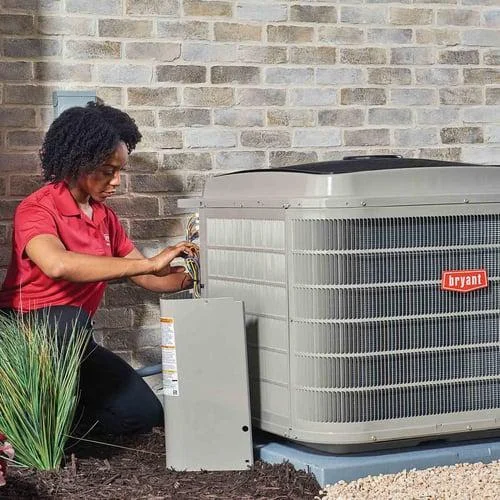
HVAC marketing has an important characteristic: customer needs change throughout the year.
During warmer periods, homeowners may search for air conditioning repairs, cooling problems, or replacement equipment.
As temperatures fall, attention can shift toward heating system inspections, furnace repairs, and heat pump performance.
Maintenance searches may occur before customers experience a problem.
These differences should influence how an HVAC company organizes its website and develops content.
| Customer need | Relevant website content |
| AC not cooling | Air conditioning repair page |
| New cooling equipment | AC installation and replacement page |
| Heating system problem | Heating repair page |
| Preventive service | HVAC maintenance page |
| Equipment comparison | Educational buying guide |
The objective isn’t to publish seasonal content merely because the calendar changes.
It’s to anticipate the information customers need and ensure relevant pages are available when they begin searching.
Prepare Before Demand Changes
An HVAC company shouldn’t wait until the first major cooling problem of the season to create its air conditioning repair page.
Important service pages should already be accessible, accurate, and connected to the rest of the website.
Educational articles can then support those pages.
For example, an article about warning signs of AC problems can link naturally to the company’s air conditioning repair service.
A guide explaining heat pump replacement considerations can direct readers toward the company’s installation services.
This approach creates a useful relationship between educational content and commercial service pages.
2. Optimize Your Google Business Profile for Actual HVAC Services
Google Business Profile is an important discovery tool for local service companies.
Google states that local rankings are primarily influenced by relevance, distance, and prominence. Complete business information, customer reviews, and links from other websites can contribute to the signals Google uses.
An HVAC contractor should begin with accurate business information.
The profile should identify the company’s legitimate operating location, actual service area, appropriate business categories, and current contact information.
Service descriptions should accurately represent the work performed.
For example, a company might offer air conditioning repair, heat pump installation, heating maintenance, and indoor air quality services.
However, a company that doesn’t install ductless mini-split systems shouldn’t list that service simply to target additional keywords.
Show Relevant Work
Actual photographs can help customers understand the company’s capabilities.
Useful images might show technicians performing equipment installations, completed HVAC projects, or the company’s service vehicles.
Photographs should represent the business accurately.
Generic images can support website design, but they shouldn’t be presented as completed company projects.
Keep Availability Accurate
HVAC customers may need assistance outside normal business hours.
If the company provides emergency service, explain its actual availability.
If emergency service isn’t offered, avoid language suggesting that technicians are available at all hours.
A customer should be able to determine how and when to request service without encountering conflicting information.
3. Create Separate Pages for Repair, Installation, and Maintenance
A homeowner whose air conditioner has stopped working has a different objective from someone comparing replacement systems.
Combining every HVAC service into one general page can make it difficult to address those needs clearly.
Dedicated pages allow a contractor to explain each substantial service in appropriate detail.
Air Conditioning Repair
An AC repair page might discuss symptoms such as inadequate cooling, unusual noises, or a system that repeatedly shuts off.
It should explain the company’s diagnostic and repair process without claiming that a particular symptom always has one cause.
The page should also identify the company’s service area and provide a clear appointment request option.
HVAC Installation and Replacement
Installation pages should help homeowners understand the decision-making process.
Topics may include equipment selection, system sizing, installation considerations, and the importance of evaluating the home’s actual requirements.
Avoid promising specific energy savings without a reliable basis.
Actual performance depends on equipment, installation, building characteristics, usage, and other conditions.
HVAC Maintenance
Maintenance pages can explain what a professional service appointment may involve and why homeowners might schedule inspections.
They should accurately describe the company’s maintenance services and any available service plans.
Don’t advertise maintenance packages, warranties, or pricing arrangements that the company hasn’t established.
Each page should help a customer understand the relevant service before asking them to contact the business.
4. Develop Useful Content Around Columbia Homeowners’ Questions

Educational content allows an HVAC company to address questions that arise before a customer requests service.
A homeowner might wonder whether to repair or replace an aging air conditioner.
Another may want to understand the difference between a heat pump and a conventional heating and cooling arrangement.
Someone experiencing uneven temperatures may be researching possible causes.
These are opportunities to provide useful explanations.
Potential article topics include:
- What to consider before replacing an air conditioner.
- Why an AC system may run without cooling effectively.
- Heat pump repair versus replacement considerations.
- Questions to ask before scheduling HVAC installation.
- How to prepare your heating system for cooler weather.
The articles should provide meaningful information rather than repeating the same sales message.
Connect Articles to Appropriate Service Pages
A guide about replacing an air conditioner can link to the company’s installation page.
An article about common cooling problems can connect readers with its repair services.
A maintenance article can link to the relevant maintenance page.
Google’s Search Essentials recommend helpful, people-first content and crawlable links that help users and search engines discover related pages.
The relationship between the article and the linked service should be natural.
5. Establish Genuine Geographic Relevance in Columbia
An HVAC contractor based in Columbia may also serve communities such as West Columbia, Cayce, Lexington, and Irmo.
The company’s website should accurately explain that coverage.
A service-area page can help customers determine whether the company provides service at their location.
Where there is sufficient distinct information, individual location pages may also be useful.
For example, a company with genuine project experience in Lexington could feature relevant work and explain its actual service availability there.
However, a contractor shouldn’t create dozens of pages that merely replace one city name with another.
Google’s spam policies identify substantially similar pages designed to capture search traffic as potential doorway abuse.
The goal is to make geographic information useful, not manufacture the appearance of local operations.
Understand the Limits of Google Maps Coverage
A Columbia HVAC company can identify surrounding communities in its service area, but that doesn’t guarantee prominent Google Maps rankings throughout the region.
Distance remains a factor in local results.
Organic website visibility and Maps visibility should therefore be evaluated separately.
6. Use Customer Reviews to Demonstrate Service Quality
An HVAC customer may be concerned about technician professionalism, communication, scheduling, and the quality of the work.
Genuine customer reviews provide insight into previous experiences.
Google also identifies review quantity and positive ratings as factors that can contribute to local ranking.
An HVAC company can develop a consistent review request process following completed service appointments.
For example, after an air conditioning repair, the company might send a neutral follow-up message inviting the customer to share their experience.
The request should not be limited to customers expected to leave positive feedback.
Professional responses to reviews can also demonstrate how the company communicates.
Avoid disclosing private customer information or making unsupported claims about the service performed.
Reviews should support credibility, not become an exercise in manufacturing a perfect reputation.
7. Make It Easy for Customers to Request HVAC Service
Search visibility has limited business value if prospective customers cannot contact the company.
An HVAC website should work well on mobile devices and make essential information easy to find.
A homeowner with a malfunctioning air conditioner may want to call immediately.
Someone planning an equipment replacement may prefer to request a consultation.
The website should support both situations when those services are offered.
Important information includes actual service availability, geographic coverage, contact details, and the next step for scheduling.
Match the Call-to-Action to the Service
An AC repair page might invite customers to schedule a diagnostic appointment.
An installation page might encourage homeowners to request an equipment consultation or estimate.
A maintenance page could provide a way to schedule routine service.
These calls-to-action should reflect the company’s actual process.
Avoid promising immediate appointments or guaranteed repair outcomes unless the business can support those commitments.
8. Measure Which HVAC Services Generate Qualified Leads
An HVAC company needs to know more than whether its website receives additional traffic.
It should understand which services and pages generate useful inquiries.
Relevant measures include organic search visits, Google Business Profile interactions, phone calls, appointment requests, and qualified leads.
Where tracking is available, the company can also examine booked appointments and completed jobs.
Seasonal performance should be interpreted carefully.
An increase in AC repair inquiries during a hot period doesn’t automatically prove that an SEO campaign caused the increase.
Compare performance across appropriate periods and consider changes in demand, advertising, and business operations.
Evaluate Repair and Installation Leads Separately
A repair inquiry and a replacement inquiry may have different business implications.
A contractor can gain more useful insight by tracking inquiries according to service type.
This helps identify whether SEO is supporting the company’s actual priorities.
It also reveals whether certain pages attract visitors without producing relevant customer inquiries.
Frequently Asked Questions
How can an HVAC company improve its visibility in Columbia?
Start with accurate Google Business Profile information, useful service pages, genuine customer reviews, and clear geographic coverage. Educational content and legitimate local authority building can support the strategy.
Should HVAC companies publish seasonal blog content?
Seasonal articles can be useful when they answer genuine customer questions. Important repair, installation, and maintenance pages should remain available throughout the year.
Does every HVAC service need a separate page?
Distinct services with different customer needs often benefit from dedicated pages. Closely related services can be grouped when that provides a clearer experience.
Can an HVAC company rank in Columbia and Lexington?
A company can develop organic search visibility for communities it genuinely serves. Google Maps rankings remain influenced by distance and other local factors.
Can an HVAC company rank in Columbia and Lexington?
A company can develop organic search visibility for communities it genuinely serves. Google Maps rankings remain influenced by distance and other local factors.
What is the most useful way to measure HVAC SEO?
Track qualified service inquiries and, where possible, booked appointments and completed jobs. Website traffic and rankings provide supporting information.
Turn Columbia HVAC Searches Into Service Opportunities
A successful HVAC SEO strategy should help homeowners find the right information at the right time.
That means preparing for seasonal demand, explaining individual services clearly, maintaining accurate local business information, and making it easy to request assistance.
PalmettoSoft helps South Carolina service businesses develop SEO strategies aligned with their customers, services, and growth objectives.
Want to improve your Columbia HVAC company’s search visibility and generate more qualified service leads? Contact PalmettoSoft to discuss your SEO strategy.