


Table of Contents
Home improvement companies in Columbia SC often serve a wide geographic area — Forest Acres, Irmo, Lexington, West Columbia, Cayce, and dozens of surrounding neighborhoods. Yet most companies rely on a single “Service Area” page or a generic homepage to capture all of that demand.
This creates a visibility problem.
Customers search with location intent. Home improvement Columbia SC. Kitchen remodeler in Irmo. Bathroom renovation Lexington SC. Deck builder Forest Acres. When your website doesn’t have pages that match these queries, Google has no reason to rank you. And the customers who are ready to hire choose competitors who appear in their local results.
Location‑specific SEO content solves this problem. When executed correctly, it expands your reach, increases organic traffic, and attracts high‑intent leads across the Midlands.
This article breaks down the exact steps home improvement companies can take to build a location‑based content system that improves rankings, strengthens local authority, and drives more conversions.
Why Location‑Specific Content Matters for Home Improvement SEO
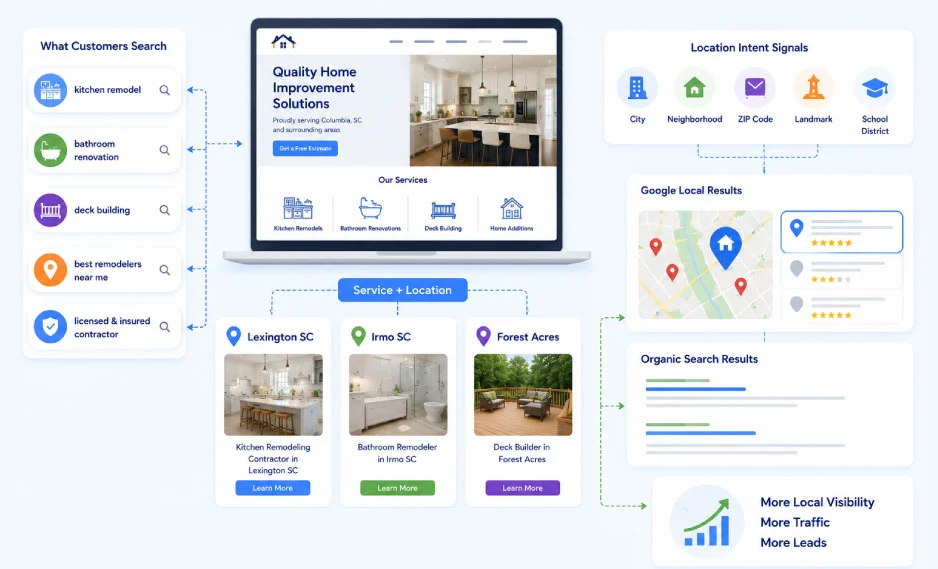
Home improvement customers behave differently from general home‑services customers. Their searches are:
- project‑specific (kitchen remodel, bathroom renovation, deck building)
- location‑specific (Lexington SC, Irmo SC, Forest Acres)
- comparison‑specific (best remodelers near me)
- credibility‑specific (licensed, insured, local experience)
Google’s Local Pack and organic results prioritize companies that demonstrate local relevance. Without location‑specific pages, your website cannot match the intent behind these searches.
Location intent signals
Customers often include:
- city
- neighborhood
- ZIP code
- nearby landmarks
- school districts
Example searches:
- “home improvement contractor Lexington SC”
- “bathroom remodeler near Forest Acres”
- “deck builder Irmo SC”
Your website must reflect these patterns.
Create Location‑Specific Landing Pages for Each Service Area
Location pages are the backbone of geographic SEO expansion. They allow your company to rank in multiple cities without duplicating content or cannibalizing keywords.
Minimum location page structure
Create pages for:
- Columbia SC
- Lexington SC
- Irmo SC
- West Columbia SC
- Cayce SC
- Forest Acres SC
- Northeast Columbia (Sandhills, Spring Valley)
Each page should include:
- a clear headline (“Home Improvement Services in Lexington SC”)
- a short overview of the area
- common home improvement needs in that location
- before/after project photos from nearby neighborhoods
- a list of services offered
- local testimonials
- a clear call‑to‑action
Why this works
Location pages:
- match local search intent
- increase relevance for city‑specific keywords
- improve Local Pack visibility
- strengthen internal linking
- help Google understand your geographic footprint
This is one of the highest‑ROI SEO tactics for home improvement companies.
Optimize Each Location Page for Local Search Intent
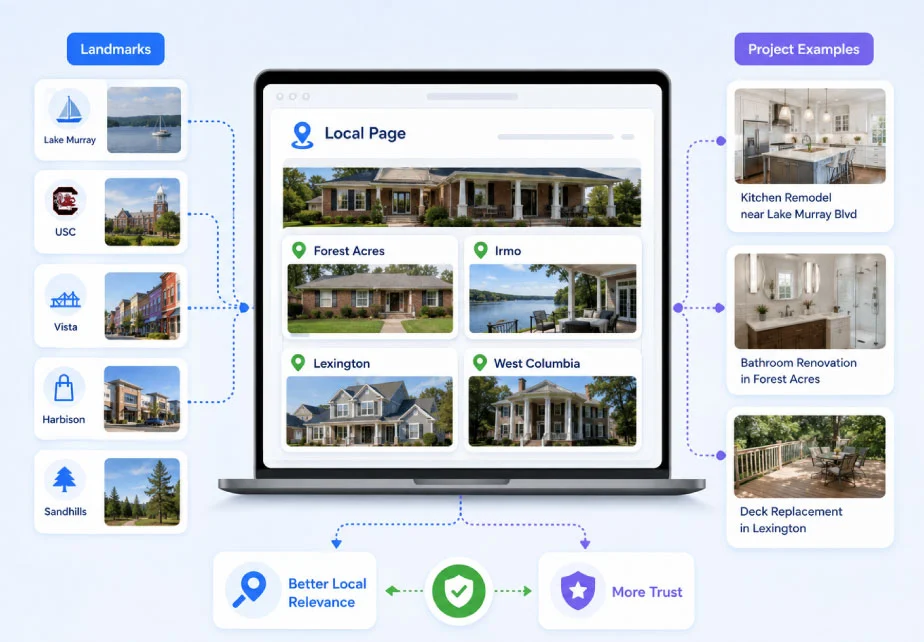
Location pages must feel local — not generic.
Include neighborhood‑specific references
Examples:
- Forest Acres: older brick homes, interior updates, deck replacements
- Irmo: lake‑area homes, outdoor living spaces, kitchen upgrades
- Lexington: new construction communities, bathroom remodels, flooring
- West Columbia: historic homes, structural repairs, additions
These references signal local expertise.
Add local landmarks
Examples:
- Lake Murray
- USC campus
- Vista district
- Harbison area
- Sandhills
Landmarks help Google understand geographic relevance.
Add local project examples
Examples:
- “Kitchen remodel completed near Lake Murray Blvd”
- “Bathroom renovation in Forest Acres brick ranch”
- “Deck replacement in Lexington’s Whiteford neighborhood”
This builds trust and improves conversions.
Create Service‑Specific Content for Each Location
Home improvement companies often offer multiple services:
- kitchen remodeling
- bathroom remodeling
- flooring installation
- deck building
- home additions
- whole‑home renovations
- outdoor living spaces
Each service has its own keyword cluster.
Create service‑specific sections on each location page
Example for Lexington SC:
- Kitchen Remodeling in Lexington SC
- Bathroom Renovations in Lexington SC
- Deck Building in Lexington SC
- Flooring Installation in Lexington SC
This allows each service to rank within each location.
Avoid duplicate content
Do not copy/paste the same text across pages.
Instead, customize:
- materials
- styles
- common issues
- neighborhood examples
- project photos
This keeps pages unique and avoids SEO penalties.
Strengthen Internal Linking Between Service Pages and Location Pages
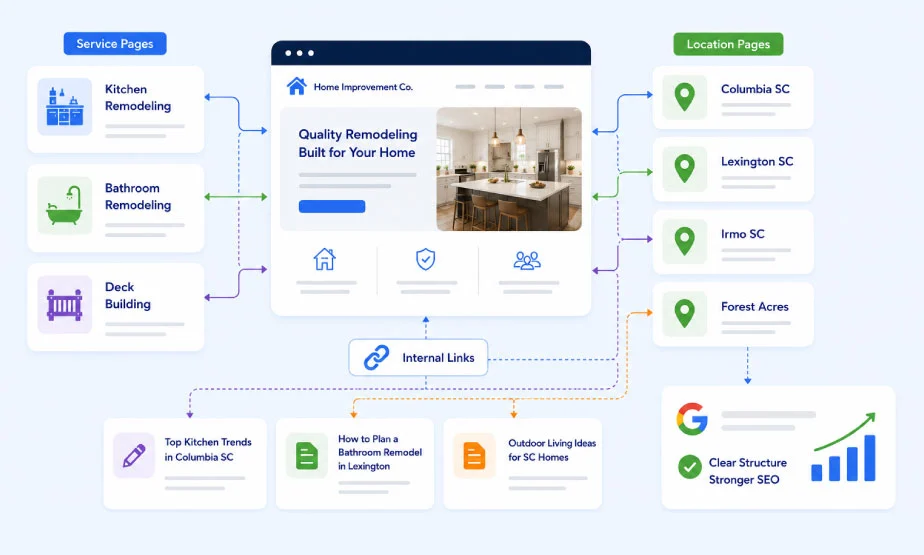
Internal linking is the mechanism that tells Google how your content is organized.
Link service pages → location pages
Example:
- Kitchen Remodeling → Kitchen Remodeling in Lexington SC
- Bathroom Remodeling → Bathroom Remodeling in Irmo SC
Link location pages → service pages
Example:
- Lexington SC → Kitchen Remodeling
- Forest Acres → Deck Building
Link blog posts → location pages
Examples:
- “Top Kitchen Trends in Columbia SC” → Columbia SC location page
- “How to Plan a Bathroom Remodel in Lexington” → Lexington SC location page
This creates a strong, interconnected content system.
Use Schema to Support Local and AI‑Driven Search
Schema markup improves visibility in both traditional search and AI Overviews.
Recommended schema types
- LocalBusiness
- Service
- FAQPage
- ImageObject
- Review
Schema helps Google understand:
- where you operate
- which services you offer
- which questions you answer
- which locations you serve
This increases relevance for location‑specific queries.
Optimize Project Galleries for Local SEO
Home improvement is visual. Customers want proof of craftsmanship.
Each project should include
- before/after photos
- materials used
- location (city or neighborhood)
- timeline
- challenges and solutions
- cost factors (not exact pricing)
Optimize for Google Image Search
Use:
- descriptive file names
- alt text
- captions
- structured project descriptions
Image search drives high‑intent home improvement traffic.
Build Local Authority Through Reviews and Local Links
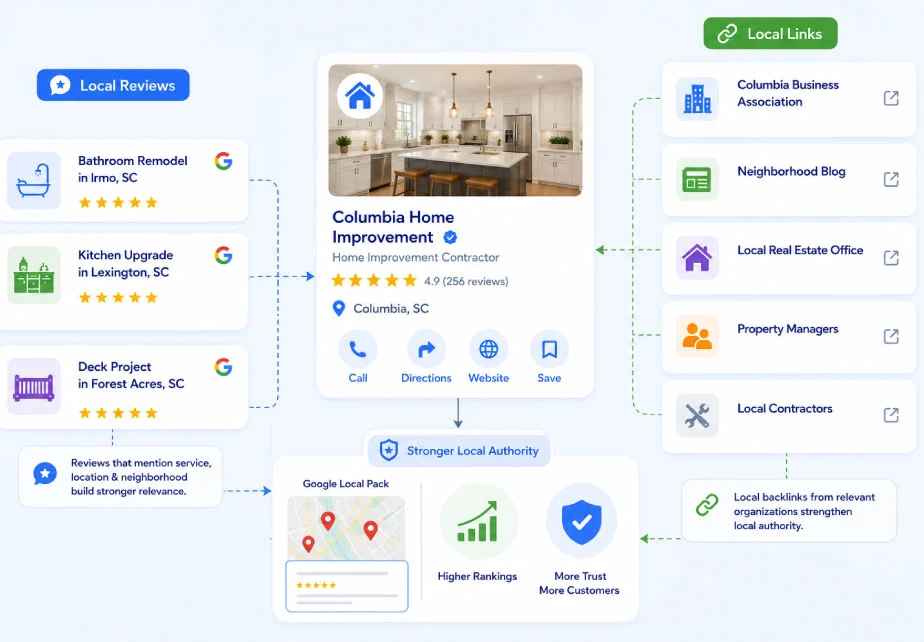
Local authority signals help Google determine which home improvement companies deserve top placement.
Review strategy
Ask customers to mention:
- the service
- the location
- the neighborhood
Example:
“Bathroom remodel in Irmo — excellent work.”
Local backlinks
Earn links from:
- Columbia business associations
- neighborhood blogs
- real estate offices
- property managers
- local contractors
These links strengthen local relevance.
Conclusion: Location‑Specific SEO Expands Reach and Increases High‑Intent Leads
Home improvement companies in Columbia SC can dramatically expand their reach by:
- creating location‑specific landing pages
- optimizing content for local search intent
- adding service‑specific sections for each location
- strengthening internal linking
- using schema to support AI and traditional search
- optimizing project galleries
- building local authority signals
When executed correctly, location‑specific SEO becomes a predictable engine for high‑intent home improvement leads across Columbia and the Midlands.
Call to Action:
If you want a complete location‑based SEO strategy tailored to your home improvement business, schedule a strategy session with our team. We’ll audit your current setup, identify gaps, and build a plan that increases visibility, improves conversions, and drives consistent high‑intent leads across every service area you serve.
FAQ
Do home improvement companies need separate pages for each location?
Yes. Location pages match local search intent and improve rankings.
Which Columbia SC areas should home improvement companies target?
Lexington, Irmo, Forest Acres, West Columbia, Cayce, and Northeast Columbia.
How does AI search affect location‑based SEO in 2026?
AI Overviews rely heavily on structured Q&A, schema, and entity‑rich content.
How do I avoid duplicate content across location pages?
Customize examples, materials, neighborhoods, and project photos for each location.